

A Local Guide to Waves, Wind & Where to Surf
Updated September 2026
Cape Town is one of South Africa’s most diverse surfing destinations, with surf breaks spread across both the Atlantic and False Bay coastlines. Because the Cape Peninsula is exposed to different wind and swell directions, conditions can vary dramatically from one side of the peninsula to the other.
This means choosing where to surf in Cape Town is less about having one favourite beach and more about understanding the wind, swell, tides and your surfing ability.
As Cape Town surfers and surf coaches, this is something we assess every day before deciding where to surf.

Is Cape Town Good for Surfing?
Yes. Cape Town offers surfing throughout the year, with everything from gentle beach breaks suitable for beginners to powerful waves for experienced surfers.
What makes Cape Town particularly interesting is its geography. The Cape Peninsula juts out between two coastlines, creating very different surfing conditions within a relatively small area.
A beach can be windy and messy on one side of the peninsula while conditions are cleaner on the other. This gives local surfers the opportunity to move according to the conditions.
Winter generally brings larger and more consistent swell to Cape Town, but beginners can surf throughout the year when the conditions are suitable.
Understanding Cape Town’s Two Surf Coastlines
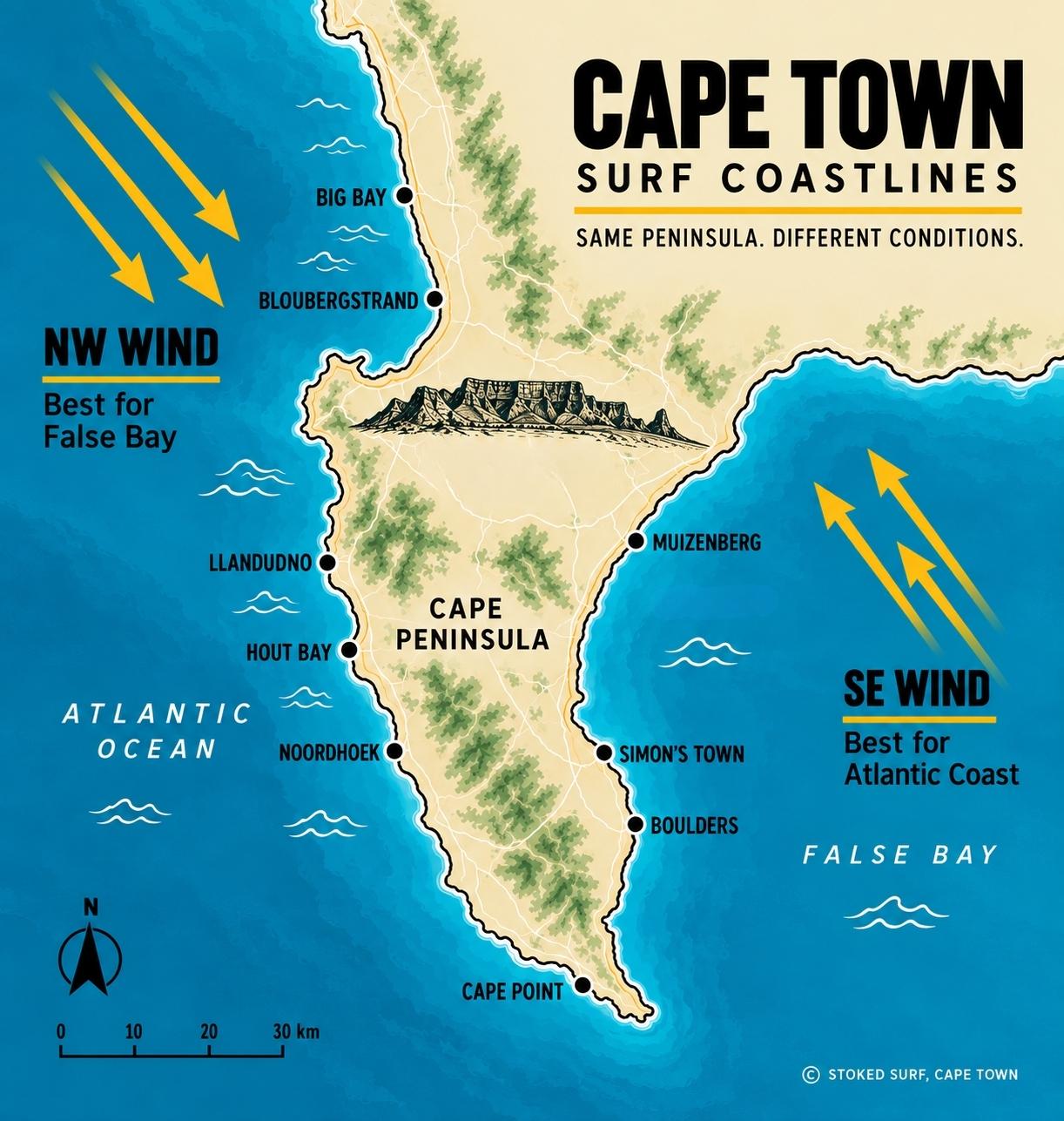
One of the first things to understand about surfing in Cape Town is that we essentially have two distinct surf coastlines: the Atlantic Coast and False Bay.
Surfing on the False Bay Coast
False Bay lies on the eastern side of the Cape Peninsula and includes Muizenberg, one of Cape Town’s best-known surfing beaches.
Muizenberg’s long sandy beach and generally forgiving waves make it particularly suitable for learning to surf. On the right day, it is also great fun for longboarders and more experienced surfers looking for a relaxed session.
Because False Bay is partially sheltered by the Cape Peninsula, swell reaching this coastline behaves very differently from swell arriving on the more exposed Atlantic Coast.
Surfing on the Atlantic Coast
Cape Town’s Atlantic coastline is more exposed to swell arriving from the Southern Ocean and includes surf areas such as Big Bay and Bloubergstrand.
The Atlantic is considerably colder than many visitors expect, but it can offer excellent surf when the combination of wind and swell is right.
This difference between the Atlantic and False Bay coastlines is one of the reasons local knowledge is so useful when surfing in Cape Town.
How Does Wind Affect Surfing in Cape Town?
Wind is one of the most important factors we consider when deciding where to surf.
Cape Town is famous for its wind, particularly the strong south-easter that frequently blows during the summer months.
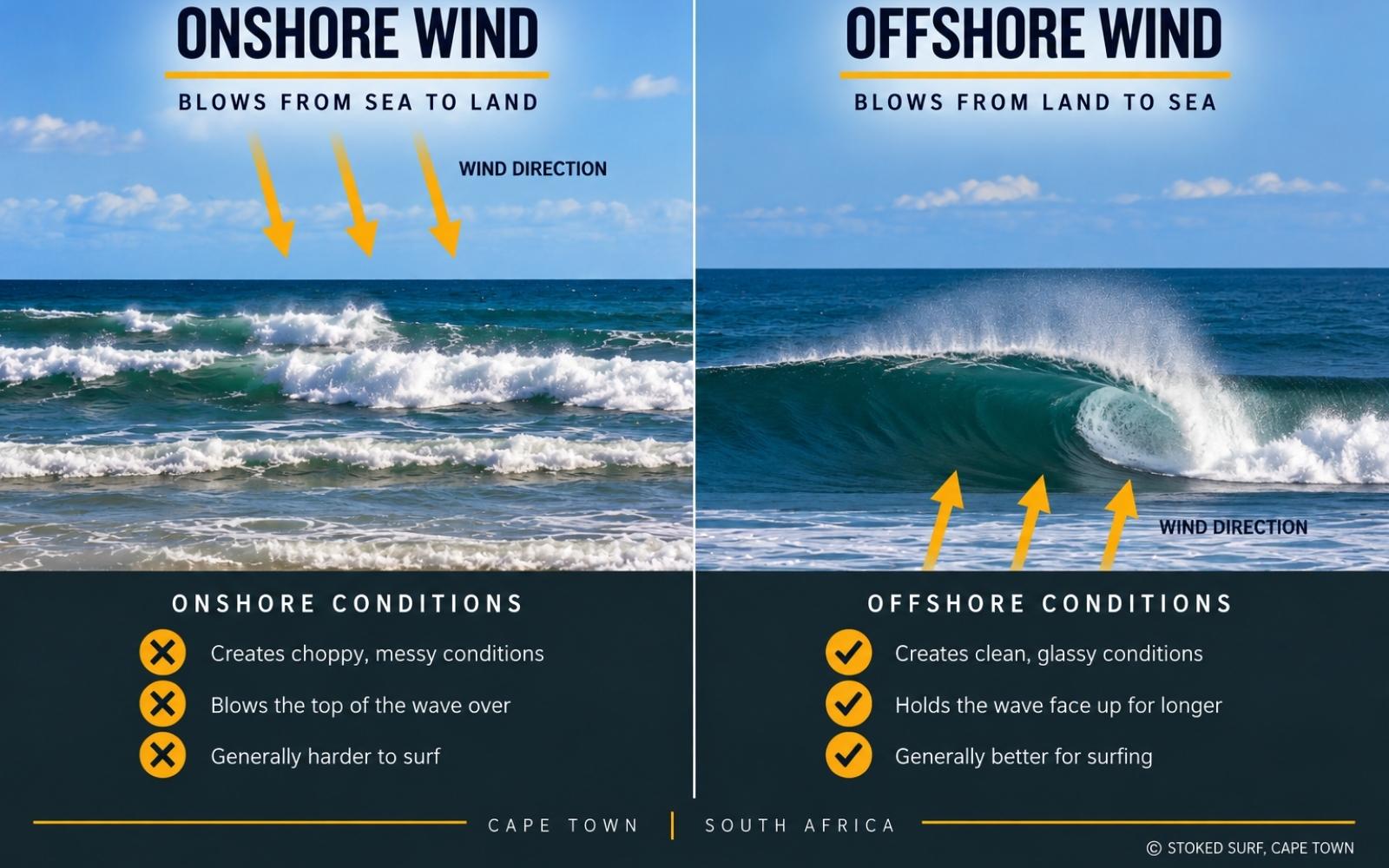
What Is an Offshore Wind?
An offshore wind blows from the land towards the ocean.
Surfers generally prefer offshore conditions because the wind helps smooth the face of the wave and can hold the wave up as it breaks. You will often recognise offshore conditions by the plume of spray blowing backwards from the crest of a breaking wave.
An onshore wind blows from the ocean towards the land and will often make the surface of the water choppy and the waves less organised.
How Does Cape Town’s South-Easter Affect the Surf?
As a general rule, Cape Town’s south-easterly wind tends to create more onshore conditions along much of the False Bay coastline while some areas on the Atlantic side can be more protected or offshore.
When the wind changes to the north-west, the opposite can occur, with cleaner conditions in parts of False Bay, including Muizenberg.
These are general rules rather than guarantees. The orientation of individual beaches, surrounding mountains and sheltered bays can create very different conditions from one surf spot to another.
This is why looking at the wind direction alone doesn’t tell you where the best waves will be.
How Does Swell Affect Cape Town’s Surf?
Wind is only part of the picture. Swell direction, swell height and swell period all affect the waves reaching Cape Town’s beaches.
Much of the swell reaching the Cape Peninsula is generated by weather systems moving through the Southern Ocean. As that swell reaches the coastline, the shape and orientation of the peninsula determine how much energy reaches individual beaches.
A swell that produces excellent waves along the Atlantic Coast may create very different conditions inside False Bay.
Similarly, a bigger swell can wrap around Cape Point and produce waves at beaches that may have been relatively small only a day earlier.
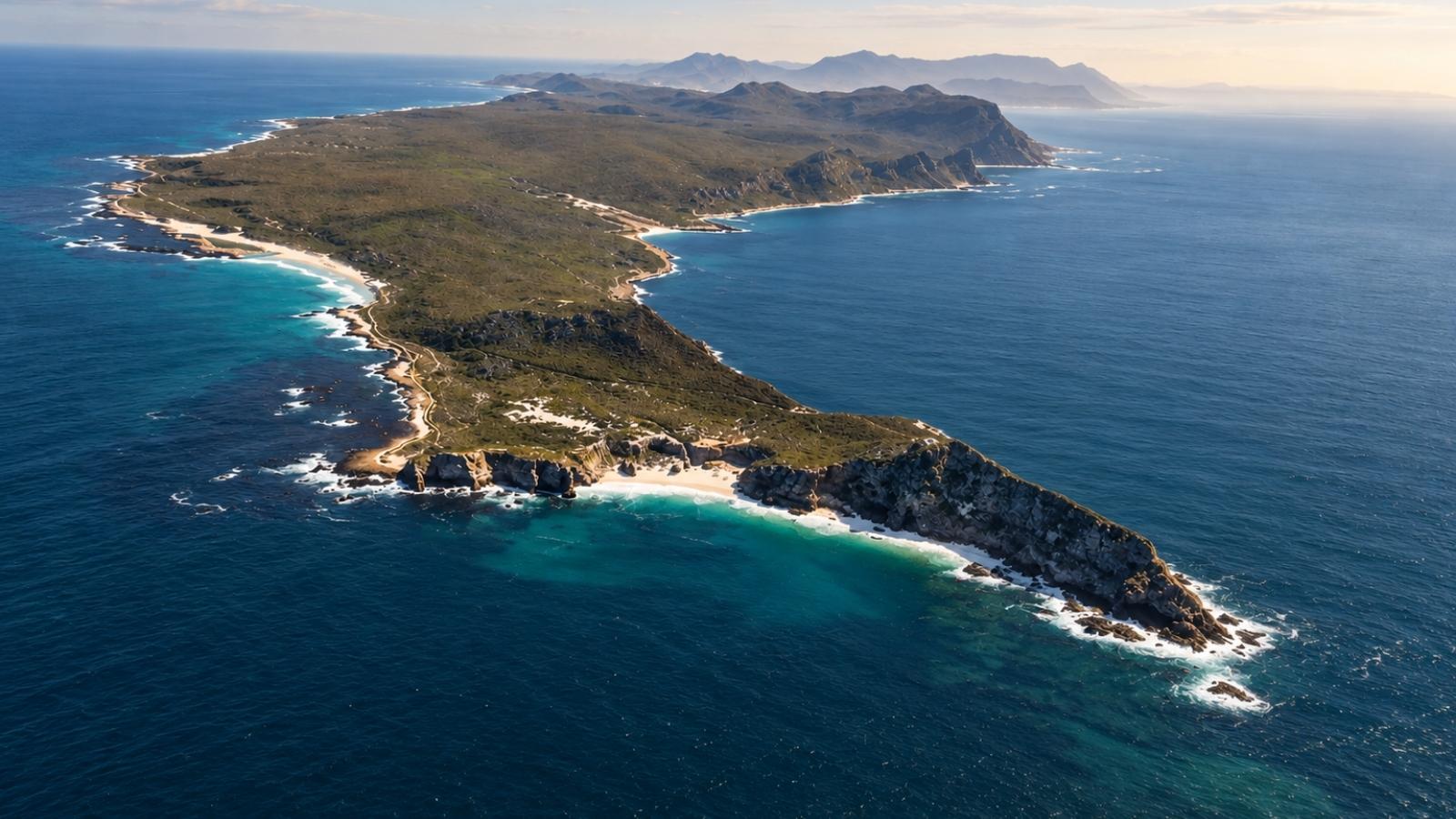
This is why simply looking at the predicted wave height isn’t enough when choosing where to surf in Cape Town.
Local surfers consider the combination of swell direction, swell period, wind direction, tide and the characteristics of each surf break before deciding where to paddle out.
Where Should Beginners Surf in Cape Town?
Muizenberg is the best-known beginner surf beach in Cape Town and for good reason. Its sandy bottom and generally slower, more forgiving waves make it a good environment for learning.
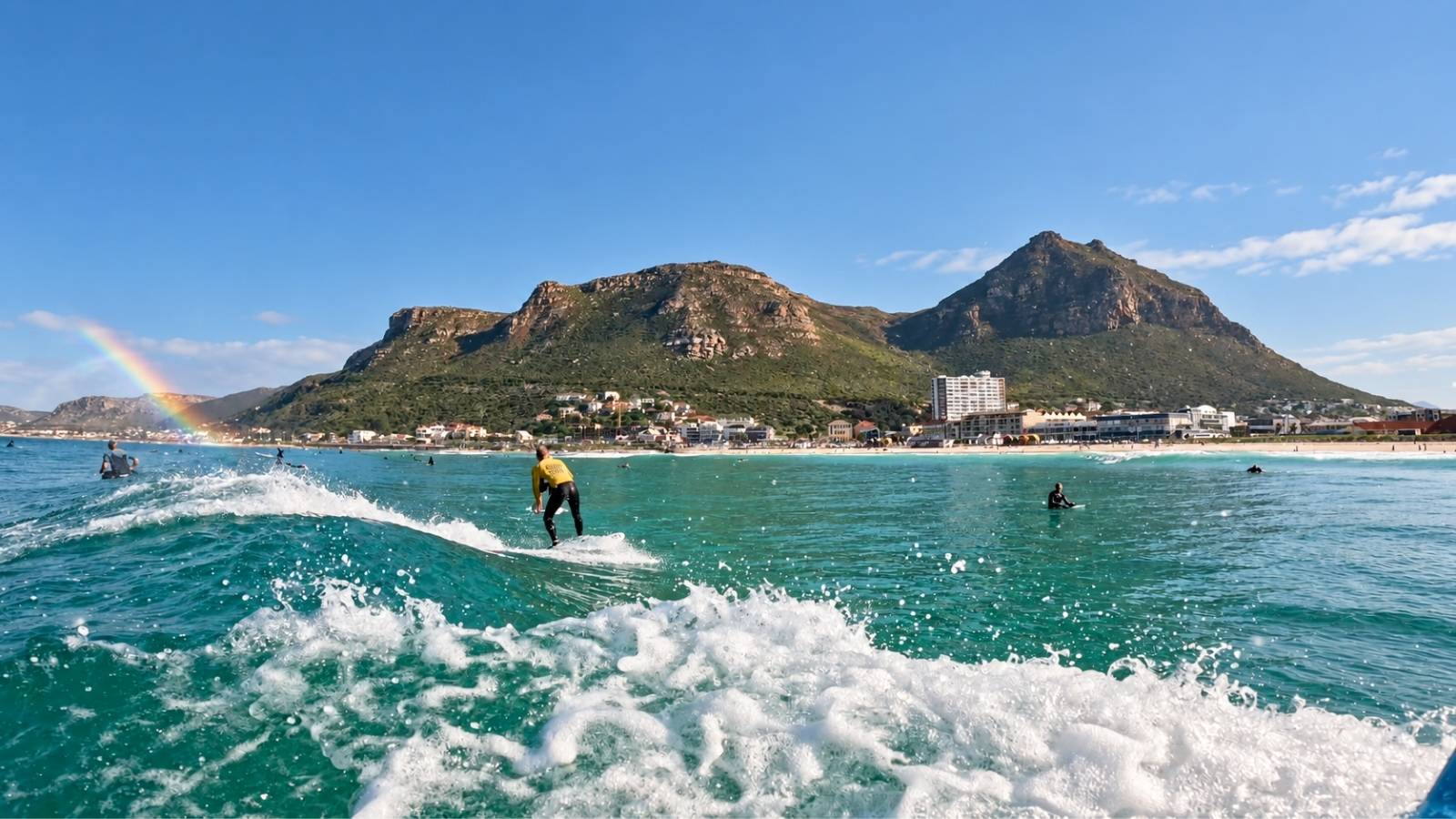
Big Bay can also provide suitable conditions for beginner surf lessons on the right day. The important distinction is “on the right day.” Neither beach is suitable for every beginner every day.
Wave size, wind, tides and currents change constantly, which is why at Stoked Surf we assess the conditions before selecting the most suitable location for our private surf lessons.
If you are learning to surf, you don’t need to understand every part of a surf forecast yourself. A qualified surf coach should select conditions appropriate to your experience and ability.
Planning your first surf? Explore our Private Surf Lessons in Cape Town.
Where Should Intermediate and Experienced Surfers Surf?
Once you can confidently paddle out, catch unbroken waves, select your own waves and surf along the open face, Cape Town becomes an incredible coastline to explore.
Beyond the well-known beaches are numerous beach breaks, reefs and more challenging waves. We are deliberately not going to list all of them here.
Part of learning to surf Cape Town is understanding which breaks work with different combinations of wind, swell and tide. Some locations also require considerable local knowledge and are not suitable for inexperienced surfers.
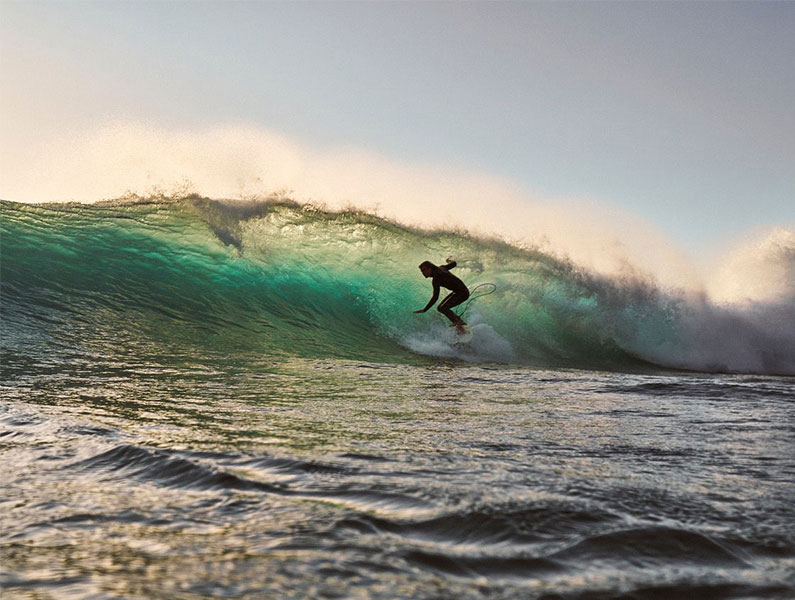
If you are visiting Cape Town and already surf independently, going out with a local surf guide can save a great deal of time driving around looking for waves and help you surf locations suited to both the conditions and your ability.
Already an independent surfer? Explore our Private Surf Guiding in Cape Town.
When Is the Best Time of Year to Surf in Cape Town?
You can surf in Cape Town throughout the year. There isn’t one single “best” month because the ideal time depends heavily on your surfing ability and the type of waves you are looking for.
Surfing Cape Town in Winter
Cape Town’s winter months generally bring larger and more consistent swell generated by storms in the Southern Ocean. Winter also brings more north-westerly winds, which can produce clean offshore conditions at Muizenberg and other False Bay surf spots.
For experienced surfers looking for more powerful surf, winter can be an excellent time to visit Cape Town.
Surfing Cape Town in Summer
Summer brings warmer weather but also Cape Town’s famous south-easterly wind. This doesn’t mean there is no surf. It means knowing where to look becomes particularly important.
For beginners, the best day matters more than the best month. Suitable wave size, wind and tide have a much greater influence on the quality and safety of your surf session than the season alone.
Do You Need a Wetsuit to Surf in Cape Town?
Yes, we recommend surfing in a wetsuit in Cape Town throughout the year.
The Atlantic coastline is particularly cold due to the influence of the Benguela Current, and the water can feel surprisingly chilly even on a hot summer day.
False Bay is generally ‘warmer’ than the Atlantic side, and on hot summer days, surfers can be spotted surfing in boardies and bikinis. But wearing a wetsuit year-round still makes surfing considerably more comfortable.
For all our experiences, we provide you with a 4:3 mm wetsuit and the option of a hooded thermal vest, so you don’t need to travel to Cape Town with your own surfing equipment.
How Do We Decide Where to Surf?
There is no single Cape Town surf beach that is best every day.
Before heading out, we look at:
- Wind direction and strength
- Swell size
- Swell direction
- Swell period
- Tide
- Surfing ability
- Local conditions
Forecasting websites are extremely useful, but forecasts only tell part of the story. Local knowledge is key.
After years of surfing Cape Town, we’ve learnt it’s nuances and also that conditions can change quickly.
If you’re surfing independently, check the forecast, read the conditions and know your limits.
And if there are good waves in front of you, paddle out. Don’t be tempted to keep looking for ‘greener pastures’.
The only way to know is to go.

Frequently Asked Questions About Surfing in Cape Town
Is Cape Town good for surfing?
Yes. Cape Town has a wide variety of surf breaks across the Atlantic and False Bay coastlines, with waves suitable for beginners through to experienced surfers. The diversity of the coastline also means surf can be found throughout the year when conditions are suitable.
Where is the best place to surf in Cape Town for beginners?
Muizenberg is Cape Town’s best-known beginner surf beach because of its sandy bottom and generally forgiving waves. Big Bay can also be suitable for beginners when conditions allow. The best location on any particular day depends on the wind, swell, tide and wave size.
Can you surf in Cape Town all year round?
Yes. Cape Town can be surfed throughout the year. Winter generally brings larger and more consistent swell, while summer brings stronger south-easterly winds. Suitable conditions for beginners can occur during any season.
When is the best time of year to surf in Cape Town?
There is no single best time for everyone. Winter generally offers more consistent swell for experienced surfers, while beginners can learn throughout the year when wave size, wind and tide are suitable.
Do I need a wetsuit to surf in Cape Town?
Yes. A wetsuit is recommended throughout the year, particularly on Cape Town’s cold Atlantic coastline. Stoked Surf provides 4:3 mm wetsuits as part of its private surf lessons.
How do you choose which Cape Town beach to surf?
We assess the wind, swell, tides and surfing ability before selecting a location. Because Cape Town has surf breaks on both the Atlantic and False Bay coastlines, the most suitable beach can change from one day to the next.